
2026 Keynote Speakers
Plenary Speakers
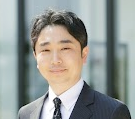
Prof. Ryo Haraguchi
University of Hyogo, Japan
Speech Title: The Art and Science of
Cardiac Modeling and Arrhythmia Simulation
Abstract: This
keynote explores the art and science of cardiac modeling, where
the "science" of creating computationally intensive models,
often requiring High-Performance Computing (HPC), is
complemented by the "art" of building a sustainable and
accessible research ecosystem. I will provide a comprehensive
overview of current trends, highlighting how Open Source
Software (OSS) and XML-based standards are breaking down
barriers by enabling robust model and data sharing. We will also
look toward the future, delving into the emerging paradigm of
the Digital Twin in cardiology and the software engineering
challenges it presents. This talk is an open invitation for the
software engineering community to join this exciting and
increasingly accessible field of research.
Biography: Ryo Haraguchi received Ph.D. degrees in informatics from Kyoto University, Kyoto, Japan, in 2003. He is currently a Professor at Graduate School of Information Science, University of Hyogo, Japan. His research interests include medical imaging, medical engineering, cardiac arrhythmia, and computational science. He is a member of the Japanese Society of Medical and Biological Engineering, the Japanese Heart Rhythm Society, IEICE, and IEEE.
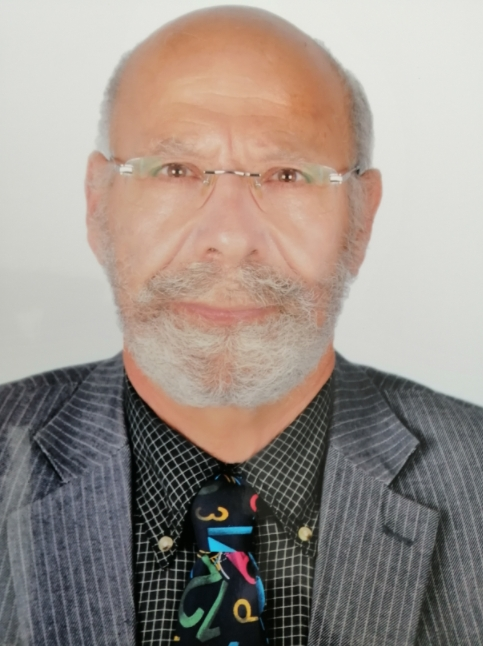
Prof. Samir Abou
El-Seoud
The British University in Egypt, Egypt
Speech Title: A Survey of Recent Technological Innovations and Their
Contribution to Improved Precision and Operational Efficiency in
Healthcare Practices
Abstract: Medical imaging visualization has
recently gained significant attention, as it has become increasingly
recognized as a foundational element in diagnosing and treating a wide
range of diseases. This review highlights key domains that benefit
substantially from advancements in medical visualization, while also
examining emerging technological developments enabled by computer
graphics, machine learning (ML), and deep learning (DL).
Biography: Professor Samir Abou El-Seoud received his BSc degree in
Physics, Electronics and Mathematics from Cairo University in 1967, his
Higher Diploma in Computing from Technical University of Darmstadt (TUD)
/Germany in 1975 and his Doctor of Science from the same University
(TUD) in 1979.
Field of study: Scientific Computations and Parallel
Algorithms.
Research interests: Computer Aided Learning, Parallel
Algorithms, Mobile Applications, Augmented Learning, Deep and machine
learning techniques, AI, Numerical Scientific Computations and
Computational Fluid Mechanics.
Teaching Interest: Computer Graphics,
Computer Organization, Computer Architecture, Logic and Digital Design,
Analysis and Design of Algorithms, Parallel Algorithms, and Data
Structure.
Professor El-Seoud held different academic positions at
TUD Germany. Latest Full-Professor in 1987. Outside Germany Professor
El-Seoud spent different years as a Full-Professor of Computer Science
at SQU – Oman, Qatar University, and PSUT-Jordan and acted as a Head of
Computer Science for many years. At industrial institutions, Professor
El-Seoud worked as Scientific Advisor and Consultant for the GTZ in
Germany and was responsible for establishing a postgraduate program
leading to M.Sc. degree in Computations at Colombo University /
Sri-Lanka (2001 – 2003). He also worked as Application Consultant at
Automatic Data Processing Inc., Division Network Services in
Frankfurt/Germany (1979 – 1980). Professor El-Seoud joined The British
University in Egypt (BUE) in 2012. Currently, he is Basic Science
Coordinator at the Faculty of Informatics and Computer Science (ICS) at
BUE.
Professor El-Seoud is the General Chair of different
International Conferences. Professor El-Seoud has more than 130
publications in international proceedings and international reputable
journals.

Assoc. Prof. Yang Cao
Institute of
Science Tokyo, Japan
Speech Title: Privacy in Fine-tuning for
Large Language Models: Attacks, Defenses, and Future Directions
Biography: Yang Cao is an Associate Professor at the Department of
Computer Science, Institute of Science Tokyo (Science Tokyo, formerly
Tokyo Tech), and directing the Trustworthy Data Science and AI (TDSAI)
Lab. He is passionate about studying and teaching on algorithmic
trustworthiness in data science and AI. Two of his papers on data
privacy were selected as best paper finalists in top-tier conferences
IEEE ICDE 2017, IEEE ICME 2020 and ACM MM 2025. He was a recipient of
the IEEE Computer Society Japan Chapter Young Author Award 2019,
Database Society of Japan Kambayashi Young Researcher Award 2021. His
research projects were/are supported by JSPS, JST, MSRA, KDDI, LINE,
WeBank, etc.
Abstract: Fine-tuning has emerged as a critical
process in leveraging Large Language Models (LLMs) for specific
downstream tasks, enabling these models to achieve state-of-the-art
performance across various domains. However, the fine-tuning process
often involves sensitive datasets, introducing privacy risks that
exploit the unique characteristics of this stage. In this tutorial, I
will provide a comprehensive view of privacy challenges associated with
fine-tuning LLMs, highlighting vulnerabilities to various privacy
attacks, including membership inference, data extraction, and backdoor
attacks. We further review defense mechanisms designed to mitigate
privacy risks and discuss their effectiveness and limitations in
addressing them while maintaining model utility.
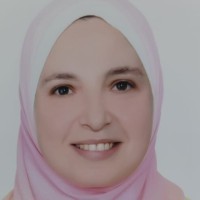
Assoc. Prof. Ghada Khoriba
Nile
University, Egypt
Speech Title: From Solo to Symphony:
How Multi-Agent AI is Orchestrating the Future of Industry
Abstract: Current artificial intelligence systems
increasingly rely on multi-agent reinforcement learning (MARL)
to address complex industrial optimization problems that surpass
the capabilities of single-agent approaches. This talk will
cover theoretical foundations and practical implementations of
MARL in various industrial sectors. Through systematic analysis
of industrial case studies, we explore emergent coordination
mechanisms, scalability challenges, and performance metrics in
real-world deployments. The talk addresses research gaps,
including non-stationarity, partial observability, and reward
specification in multi-agent environments, while identifying
promising directions for advancing the field's theoretical
understanding and industrial applicability.
Biography:
Dr. Ghada Khoriba is an Associate Professor at the School of
Information Technology and Computer Science at Nile University,
Egypt. She holds a Ph.D. in Engineering and Computer Science
from the University of Tsukuba, Japan (2010), and earned her
Master's and Bachelor's degrees in Computer Science from Helwan
University, Egypt.
Dr. Khoriba's recent research focuses on
LLM/LVMs, multi-agent reinforcement learning, and computer
vision applications. She previously served as Head of the
Artificial Intelligence Department at Ahram Canadian University
and as a Computer Vision Researcher for Egypt's National
Digitization Project, MCIT.
She published more than 40+
papers, including Neural Information Processing Systems
(NeurIPS) workshop, and she was recognized among the top 40
high-impact researchers at Helwan University. Dr. Khoriba is a
member of IEEE Computational Intelligence Society and ACM.
2024 Keynote SpeAkers
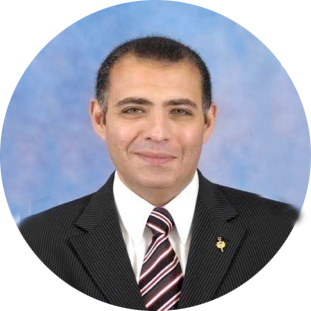
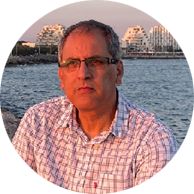 Prof. Farid Meziane University of Derby, UK Speech Title: Exploiting Web Resources to Support Automatic Course Design |
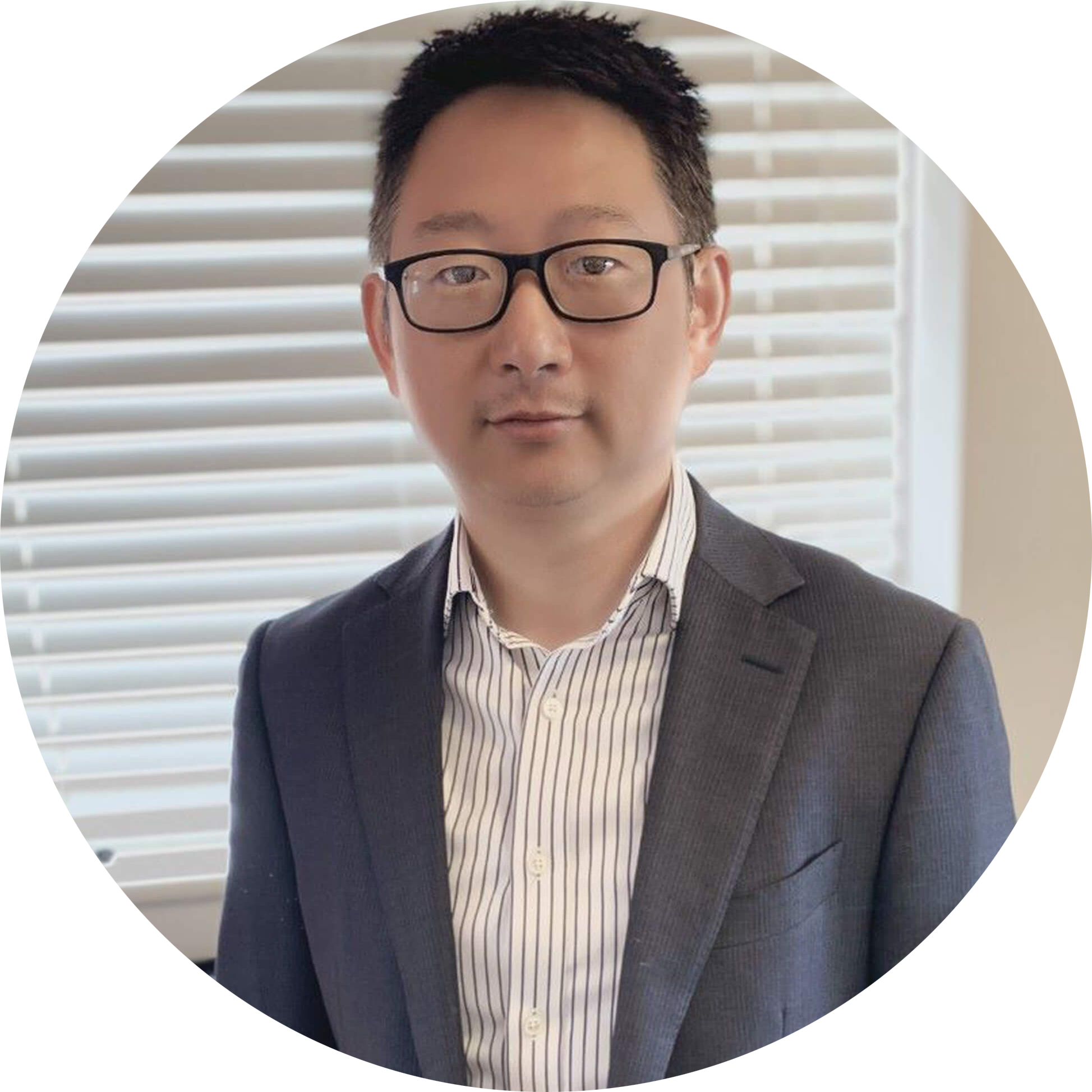
 >Prof. Tarek M. Sobh University of Bridgeport, USA Speech Title: The Future Reimagined: Disruptive Technologies and the Dawn of the Autonomous Age |
 Assoc. Prof. Harry Yu University of Derby, UK Speech Title: Generative AI (LLM) for Software Engineering: Current Work and Challenges and Future Directions |
 Dr. Branislav Vuksanovic Military Technological College, Oman Speech Title: Challenges and Advances in Facial Expression Recognition: From Manual Analysis to Deep Learning |
